
Today I’m talking about Qwertykeys‘ latest 65% board, the Neo65 Cu. I am so impressed with this board and recommend it to anyone looking for a ~$200 board that punches above its weight (which is considerable, considering the optional copper bottom case). Let’s get into it.
Introduction
Neo65 Cu is the latest 65% board from the Chinese company Qwertykeys. Qwertykeys has three brands under its umbrella: Neo, QK, and Owlabs & Percent Studio. The brands range in price and style, with Neo being the most entry-level, followed by QK, and then Owlabs & Percent Studio.
Within the Neo brand, there are three series: the Neo series — Neo98, Neo75, Neo Ergo, Neo65, and Neo65 Sonic HE+; the Core series — Neo60 Core, Neo66 Core Plus; and the Cu series — Neo60 Cu, Neo65 Cu, Neo75 Cu, and Neo80 Cu. The Cu series is the newest and most premium of the Neo keyboards due to the availability of brass and copper bottom cases.
Qwertykeys first announced the Cu line in 2025 with the 75% Neo75 Cu, 65% Neo65 Cu, and 60% Neo60 Cu, in early 2025. The 80% Neo80 Cu came later in the year.
Specs
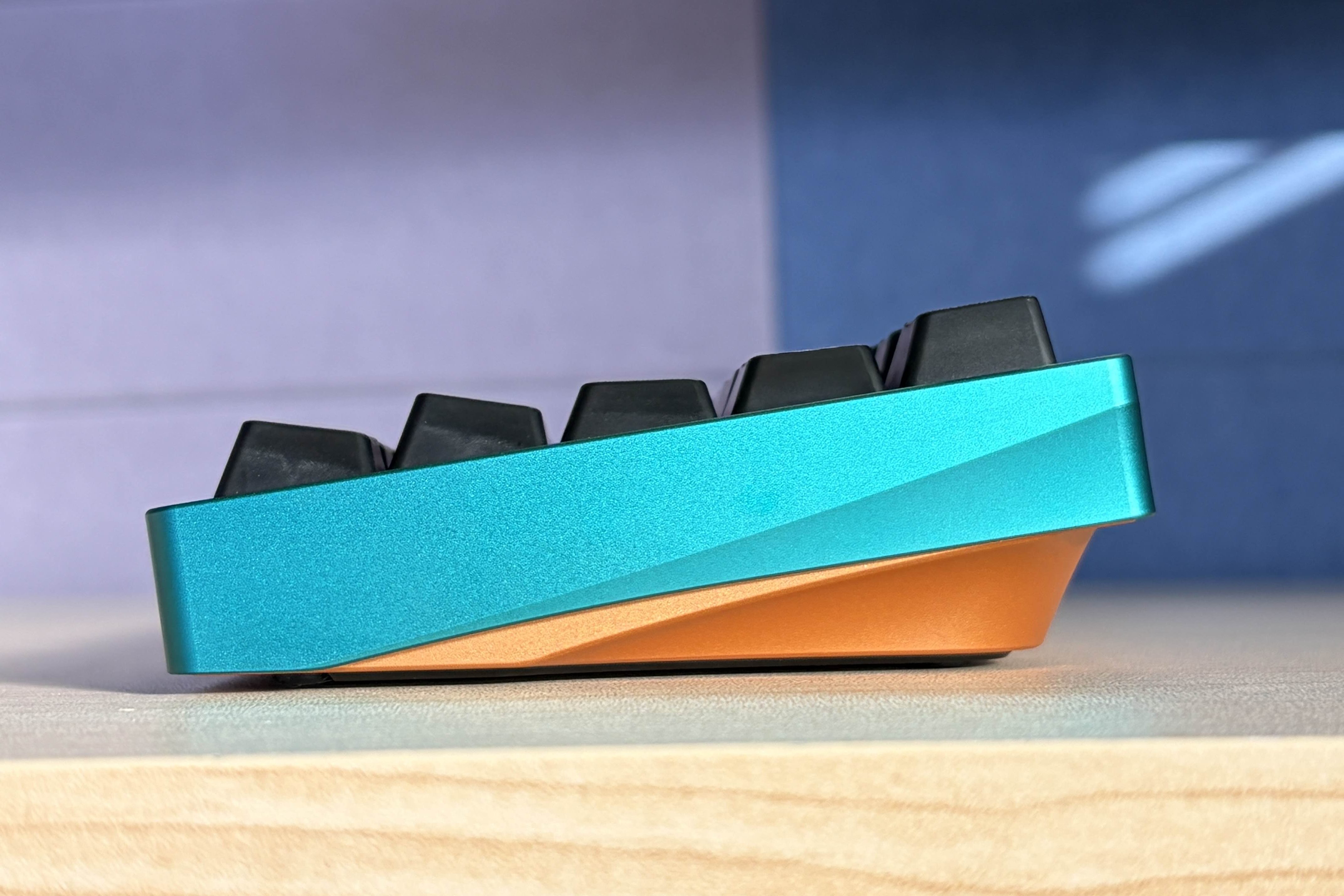
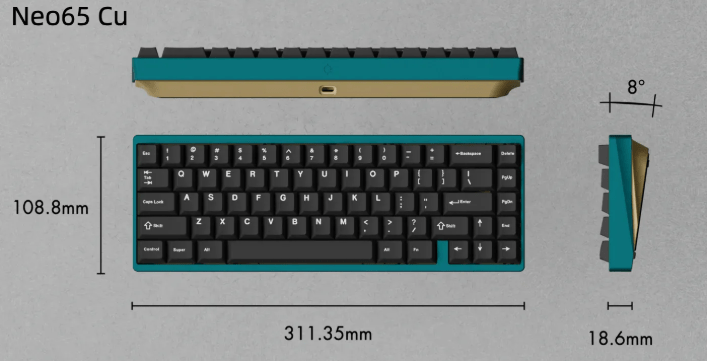
Like other 65% boards, the Neo65 Cu has a relatively small footprint, just 108.8 mm x 311.35 mm. It has a relatively steep 8-degree typing angle and a fairly standard front height of 18.6 mm.
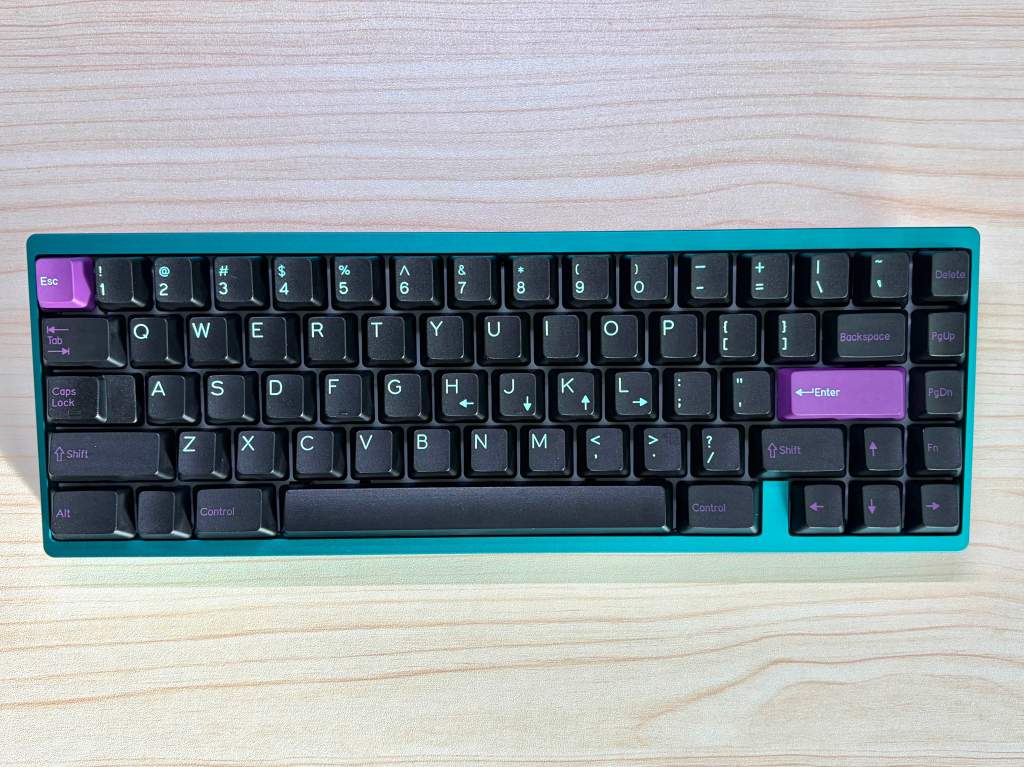
One of the great things about the Neo65 Cu and the Neo line in general is the customizability. Purchasers can design their own board with a choice of twelve different top case colors, two different bottom case materials, six different brass weights, three different PCBs, five different plates, and two different mounting styles (isolated top mount and PCB gasket mount).

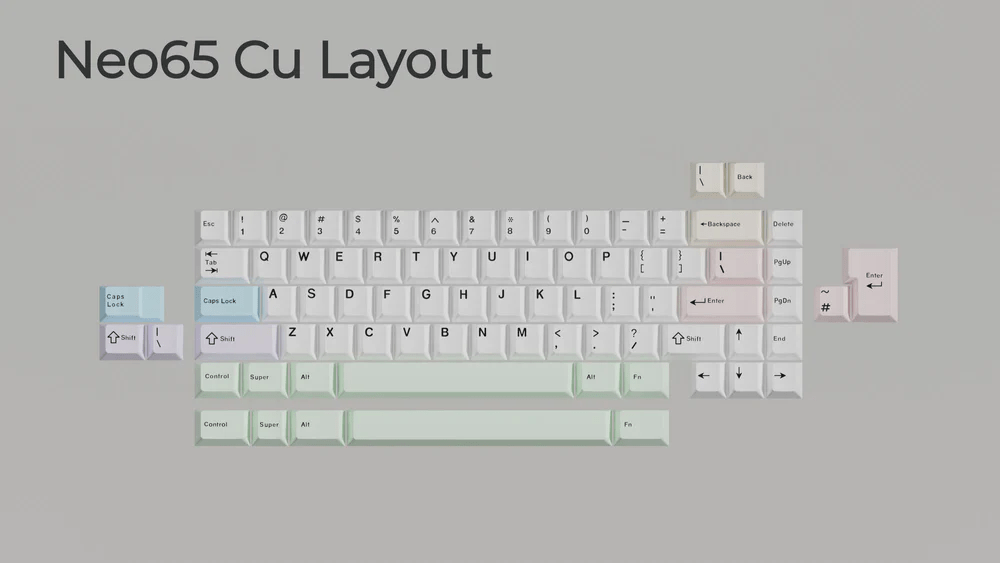
The board has three 1.6 mm PCB options: tri-mode hotswap, which allows wireless and wired connection, a wired hotswap, and a wired solder PCB. The PCBs do not have flex cuts or RGB, but they support both ANSI and ISO layouts. All three options are VIA-compatible and allow a couple of layout options.
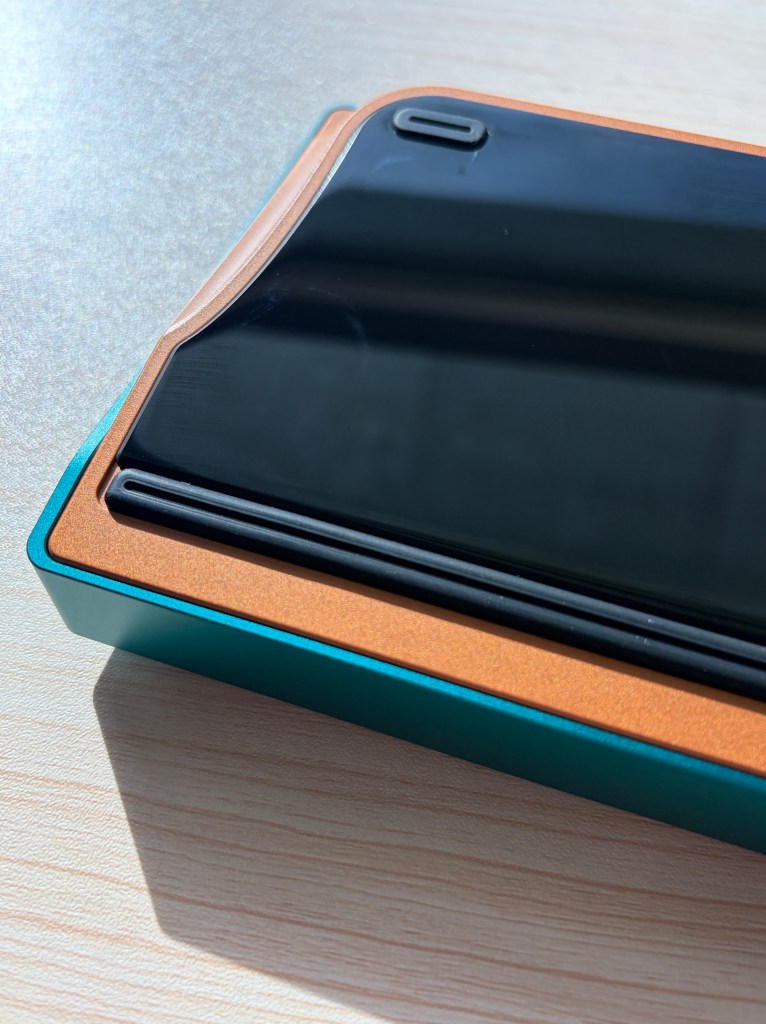
The PCB connects via magnetic pogo connector, eliminating the need for finicky JST cables.
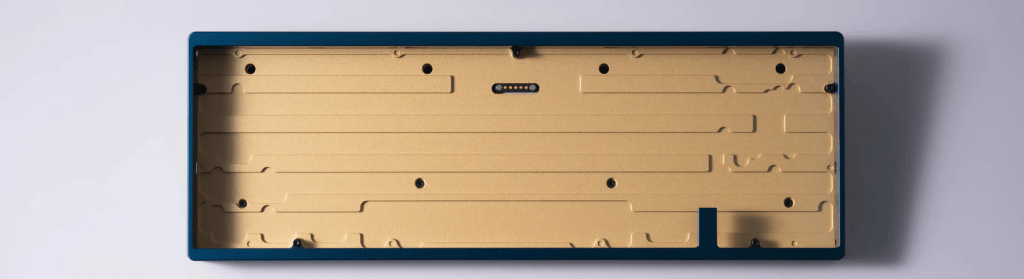
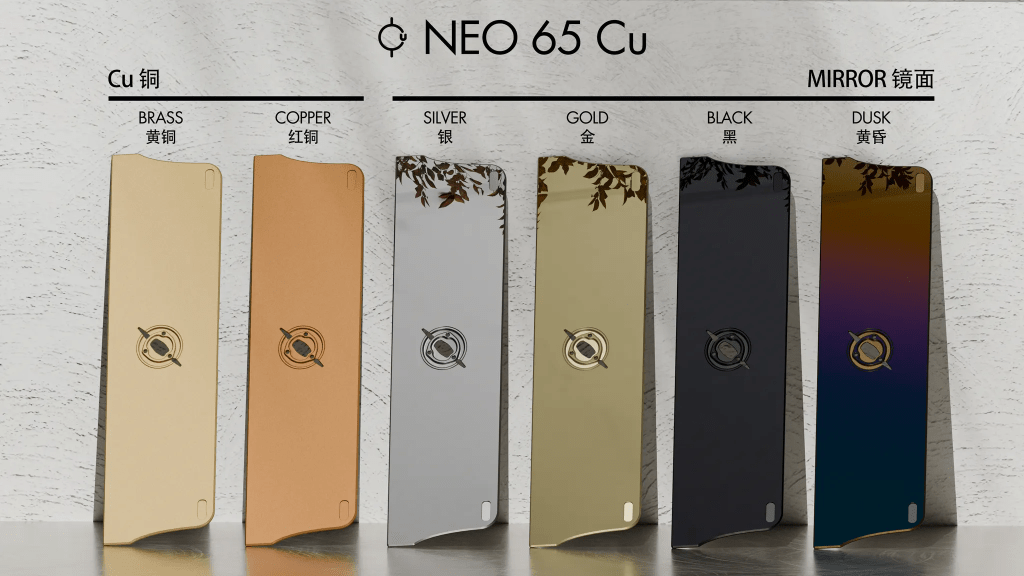
Buyers have the option of a copper bottom case and a brass bottom case. The bottom cases make these boards pretty heavy; the trimode version weighs a whopping 2.5kg (5.5 lbs.) and the wired version weighs 2.67kg (5.88 lbs.). The copper bottom is a bit heavier than the brass — about 6% heavier (the brass bottom case alone weighs 137.65g (.3 lbs.) and the copper case alone weighs 145.20kg (.32 lbs)).
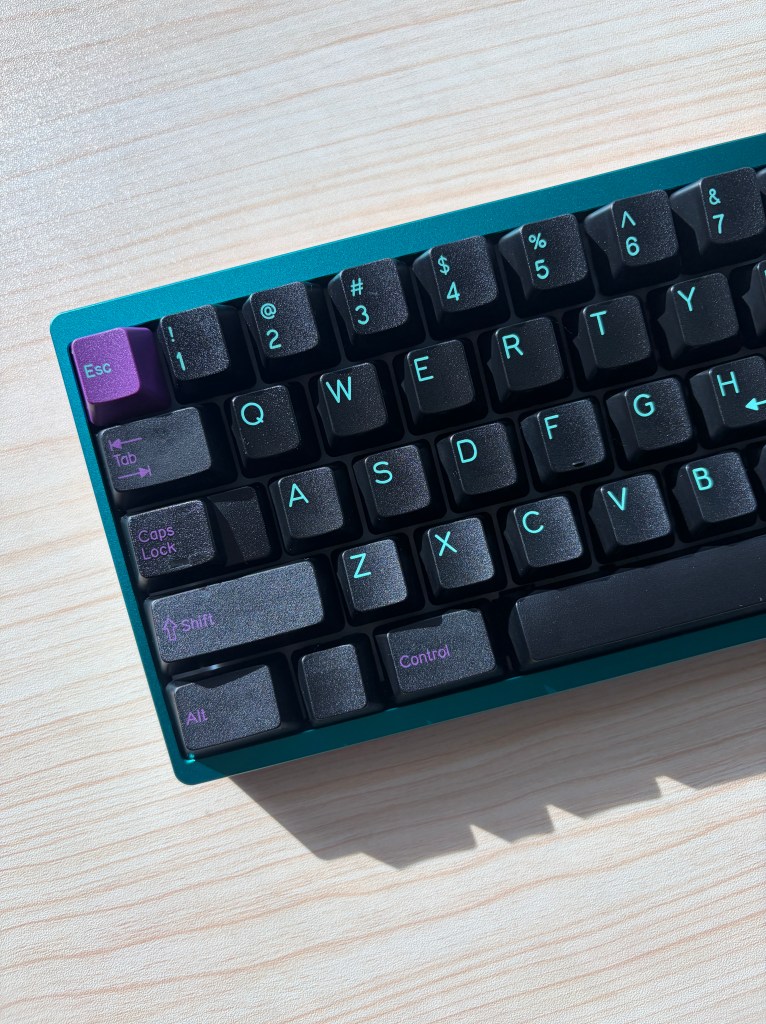
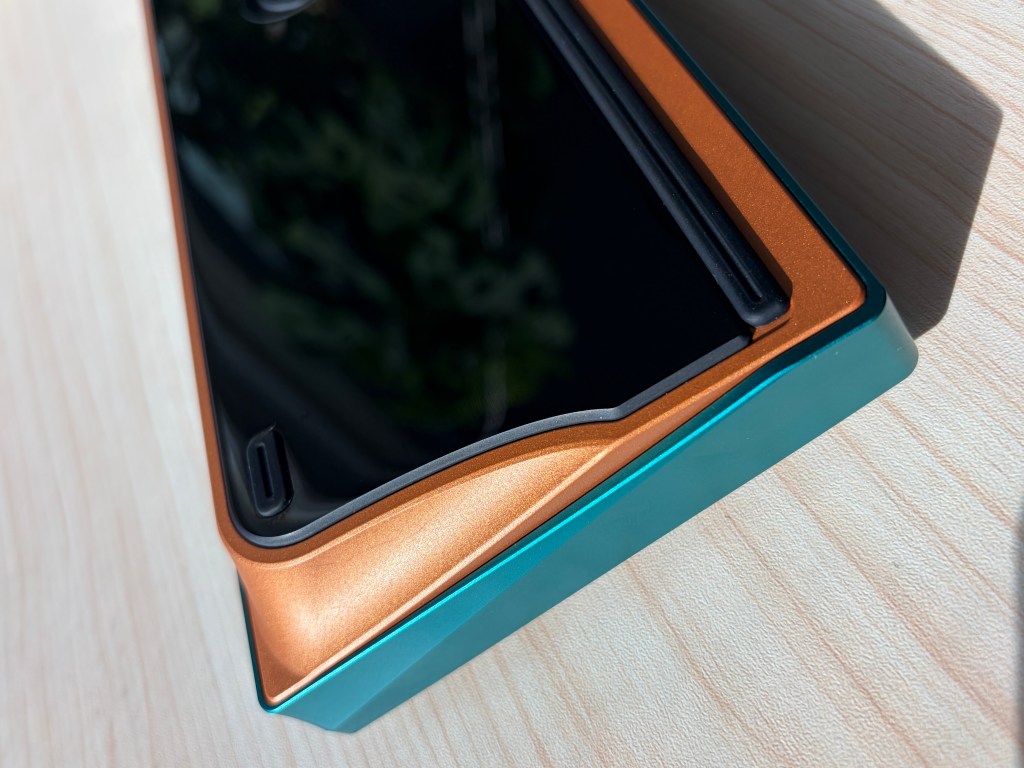
Most of the top case colors are anodized, but three — Retro White, Greige, and Nebula — are spray-coated.


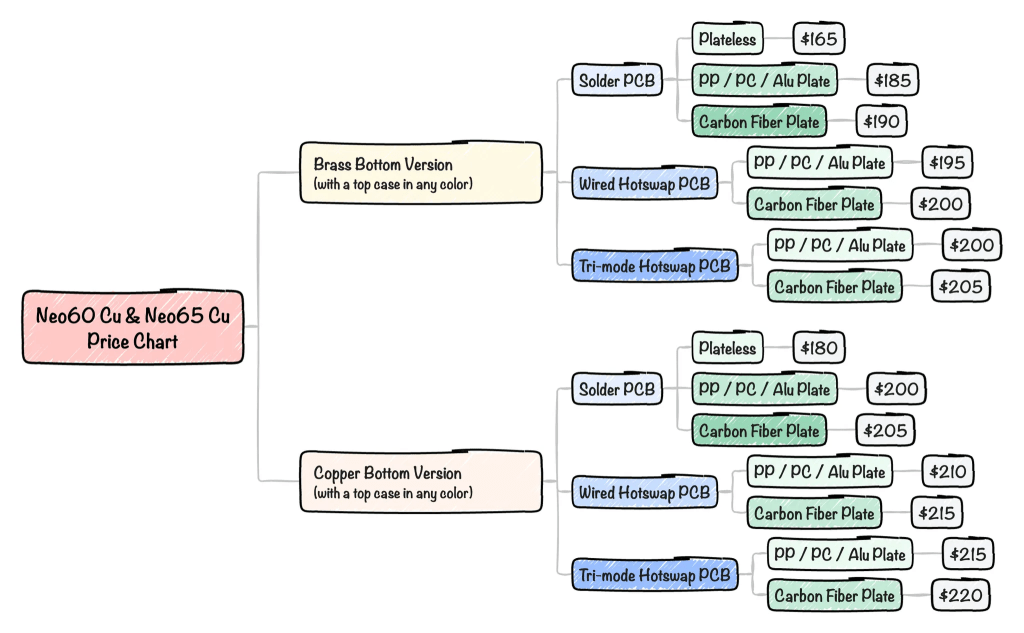
The copper bottom is also a bit more expensive than the brass — about $15 more — and the board ranges from $165 to $220 depending on the options the buyer selects. Along with the case, PCB, and plate, the board comes with poron case foam, a carrying case, a keycap and switch puller, a screwdriver, a set of PCB clip-in NeoStabs, and a USB-C cable.
Impressions
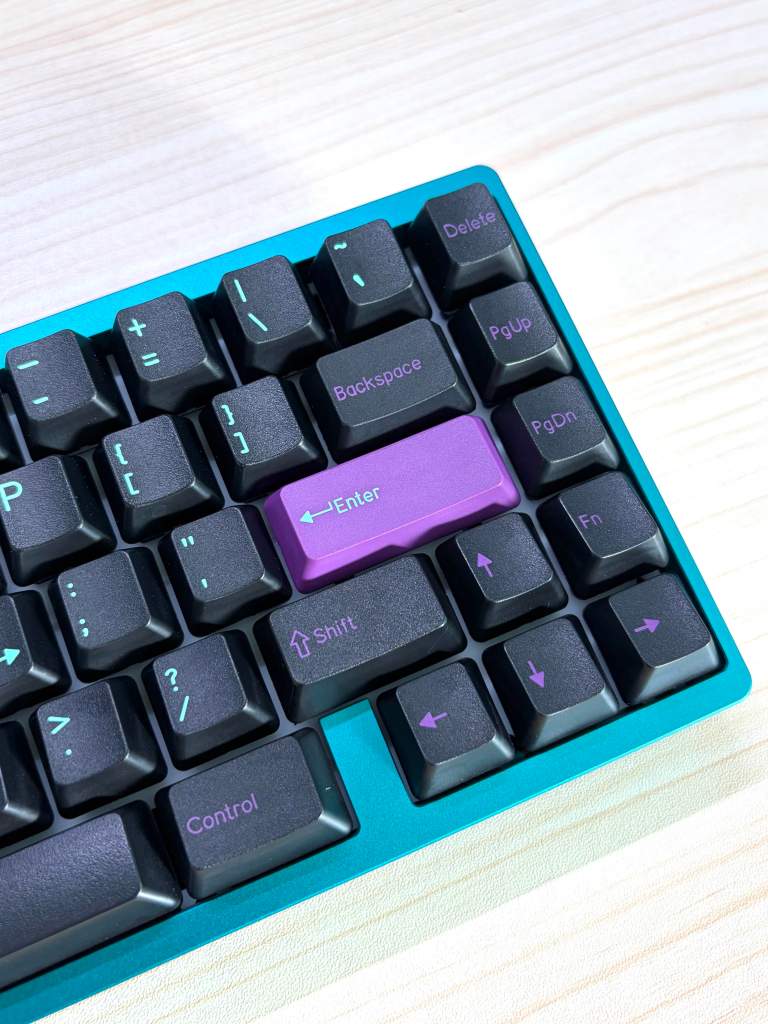
I can honestly say that Neo65 Cu is a steal for what it is. You simply can’t get this level of customization, availability, and quality at this price point. The available colors are vibrant, the sound profile is delicious, and the copper and brass bottoms feel luxurious.
I would say the sound profile is slightly lower pitched than some other boards, but if you omit the case foam and install higher-pitched switches — like the HMX Xinhai (light) switches I have installed right now — you can get all the clack you want.
And with the pogo connector and online build guides, assembly is a breeze. I feel comfortable recommending this board to anyone.
Conclusion
Neo65 Cu is #heavy, #customizable, #easy-to-build, and #instock. Novices and enthusiasts alike will love this board, and I really recommend checking it out.
 Snacks Clacks
Leave a comment